
Abrasive Media for Sandblasting Food Processing Equipment (Under Controlled Conditions)
In Food Processing, the rules are different, and they should be. Cleaning, maintenance, and surface prep should never introduce new or additional risks of food contamination.
It is very important to understand:
- Superoxalloy and most other abrasives are not “food grade.”
- Superoxalloy abrasives are being used in food facilities for surface preparation (typically in non-product zones, or on equipment/components when food is not present/exposed).
- The right way to describe 10X Engineered Materials in this environment is an industrial input used under Sanitation Standard Operating Procedures (SSOPs) and controlled conditions, not an abrasive intended for contact with exposed food.
If you’re here because you’re evaluating food processing cleaning options and want an abrasive that actually removes coatings, corrosion, or heavy buildup, superoxalloy abrasives may be a valuable option because of their unique material properties and documented safety benefits.
Is Sandblasting Near Food Safe?
Not when food (or exposed food-contact surfaces) can contact the abrasive or its dust. Abrasive blasting creates airborne particulate and secondary waste. There can be food contamination risk if that particulate can reach the exposed product or an open line.
When is it acceptable? In many plants, blasting can be acceptable under strict controls, for example:
- Product removed from the processing area (which would preclude “open product”)
- Full isolation/containment of the work zone (curtains, seals, barriers)
- Negative air / dust control and appropriate filtration where required
- Defined cleanup + verification steps (vacuuming/HEPA where applicable, wipe-down, sanitation, QA sign-off)
- Documented procedures inside a food processing facility’s SSOP framework
Sandblasting can be compatible with a food plant if the plant controls it. The process and controls dictate whether any abrasive can be used, regardless of how safe the abrasive is. Despite 10X Engineered Materials dust being officially categorized as not classifiable as a human carcinogen by the International Agency for Research on Cancer (IARC) and the American Conference of Governmental Industrial Hygienists (ACGIH), we do not market or intend our abrasive to be used as a “food grade” blasting media.
“Food Grade” Blasting Media vs. “Allowed in a Food Plant”
If you truly need a blasting method that’s broadly recognized for use in food environments, the industry most commonly leans toward:
- Sodium bicarbonate (baking soda) blasting
- Dry ice blasting
These options are often chosen because they’re compatible with sensitive environments and contamination concerns. Because dry ice sublimes into the air, it carries the additional benefit of not creating a secondary waste stream. However, it is important to understand that neither of these abrasives can profile a surface to prepare it for coating.
Other “natural” abrasive blasting media types, like nut shells, can still introduce operational risks, including allergen risks, which is why many food-processing facilities avoid them.
Where Do 10X Engineered Materials Products Fit?
10X abrasives can provide tremendous value under approved conditions where “food-grade gentle cleaning” is not enough:
- Coatings
- Corrosion
- Scale
- Concrete/steel maintenance problems
- Recoat prep requirements
- Hard-to-remove residues on non-product surfaces
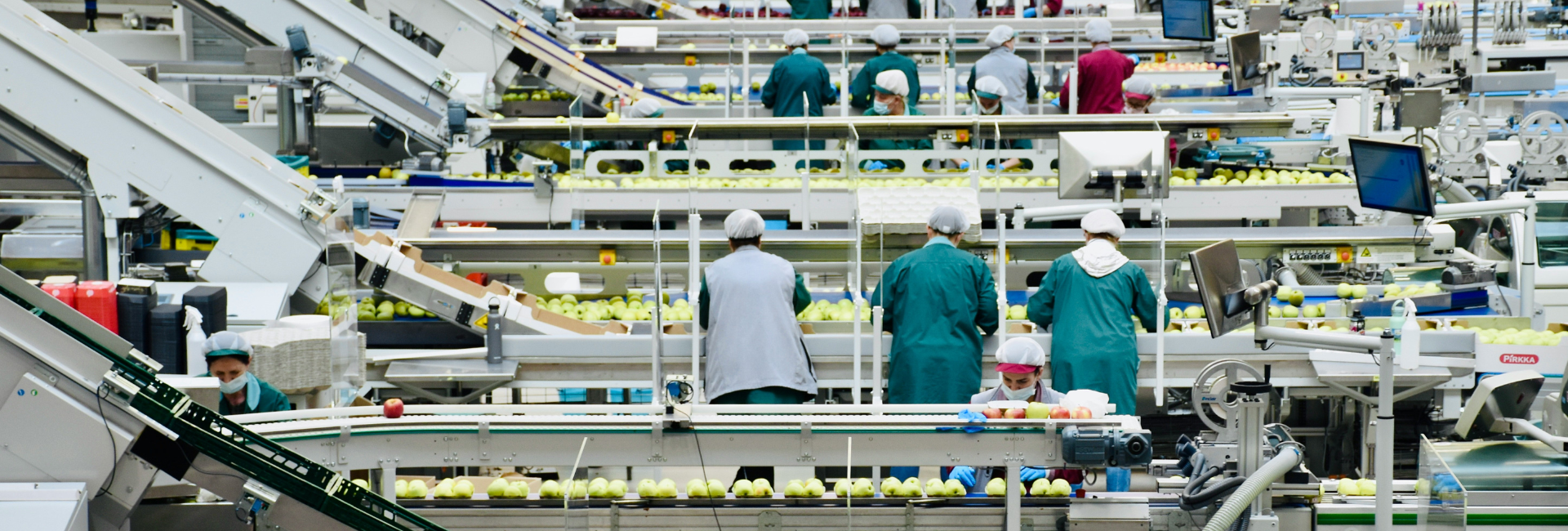
Where 10X Engineered Materials is Already Used in Food Facilities
Superoxalloy abrasives are being used for surface preparation in food production facilities, typically for:
- Structural steel, mezzanines, supports, rails (non-product zones)
- Floors, drains, and maintenance areas (with proper containment/cleanup)
- External surfaces of tanks, piping, and equipment frames
- Components removed from the line and blasted in a controlled area
- Maintenance shutdown work where the environment can be isolated and verified
Why You Should Choose Superoxalloy for Food-Plant Maintenance Blasting
Low Dust, Better Visibility, Better Control
Dust is the enemy of controlled work in a sensitive facility. Lower dust means better visibility, faster progress, easier containment/cleanup, and lower risk of penetrating sensitive areas or reaching equipment or surfaces that contact food.
Cleaner Surface, Less Embedment Risk
Abrasive embedment is a real concern when you’re preparing surfaces for coatings, corrosion resistance, or long-term durability. 10X abrasives are formulated and manufactured as a durable material that resists shattering and reduces embedment compared to other mineral abrasives.
Mineral Wool Heritage + IARC Classification
10X is made from the byproduct particles of mineral wool manufacturing. Mineral wool has been used globally for decades (including throughout industrial and food-related infrastructure where insulation and thermal control matter).
From a worker-health standpoint, studies of exposure to mineral wool dusts in humans and animals were reviewed by the WHO/IARC and the evaluation results were published in IARC Monograph Volume 81 in 2002. The working group of experts convened to perform the review unanimously voted to categorize mineral wool in Group 3 (not classifiable as to carcinogenicity to humans). This official decision removed mineral wool from lists of possible human carcinogens worldwide.
However, while this confirms that 10X Engineered Materials has a cleaner and more defensible safety profile than most if not all traditional blasting abrasives, it does not make it “food grade.”
Should You Use Superoxalloy for Sandblasting Food Processing Equipment?
Superoxalloy abrasives should not be used for sandblasting food processing equipment while food product is exposed or while the line is open.
10X Engineered Materials abrasives are being used with great success for maintenance-grade surface prep performed under SSOP-controlled conditions during shutdowns, in contained zones, on removed components, or in non-product areas



Superoxalloy Abrasives for Food-Plant Surface Prep
- KinetiX – fast production blasting where you need efficiency on common plant steels
- EpiX – when less surface profiling is required, thinner coatings are being used, or if you need tighter control and a more refined finish, particularly on stainless steel
- DynamiX – the heavy duty option for deeper surface profiles, use of thicker coatings, or removal of especially difficult coatings and corrosion
Important: Abrasive grade selection should be driven by the substrate and profile requirements, the coating system (if any), the containment plan, and the cleanup/verification steps required by your facility. We have an engineering team who will guide your team through the process and support your team’s project needs. Contact us about your operating approach and we will pair you with the right product that matches your facility’s SSOP.